Volumes Inverted – Venice Biennale 2024

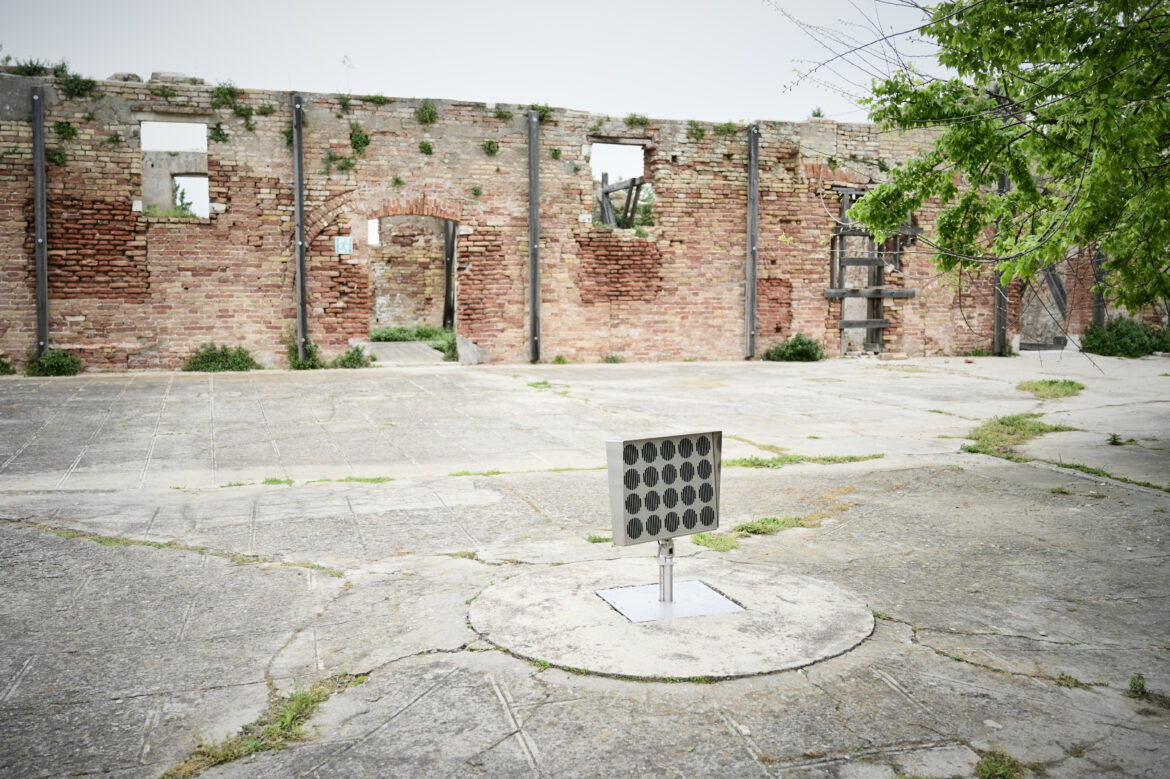
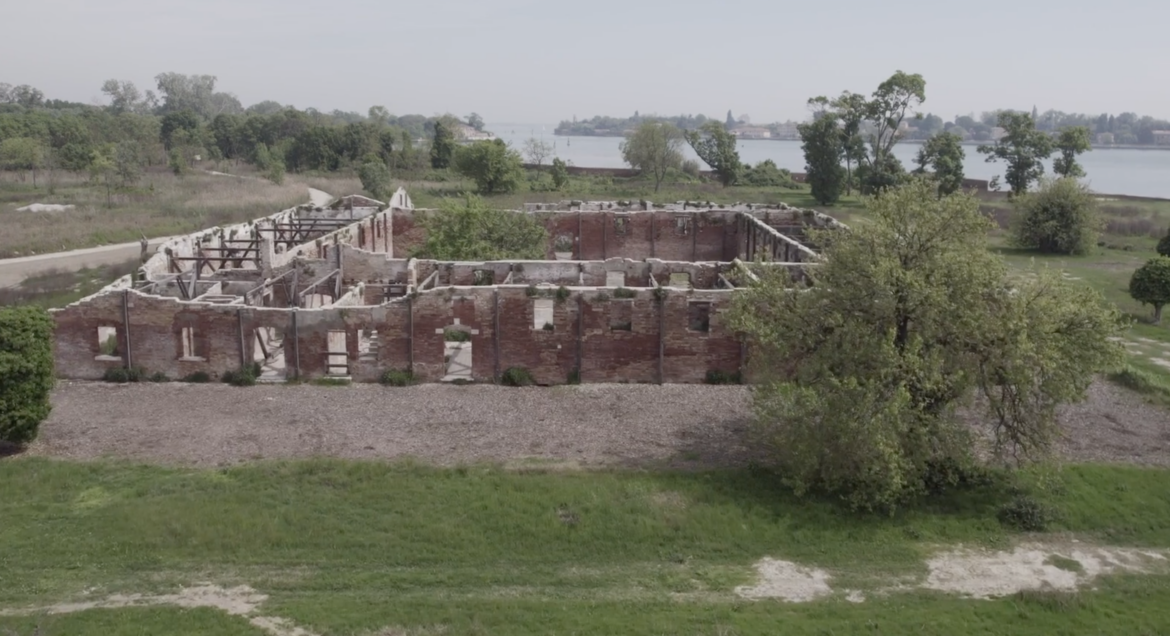
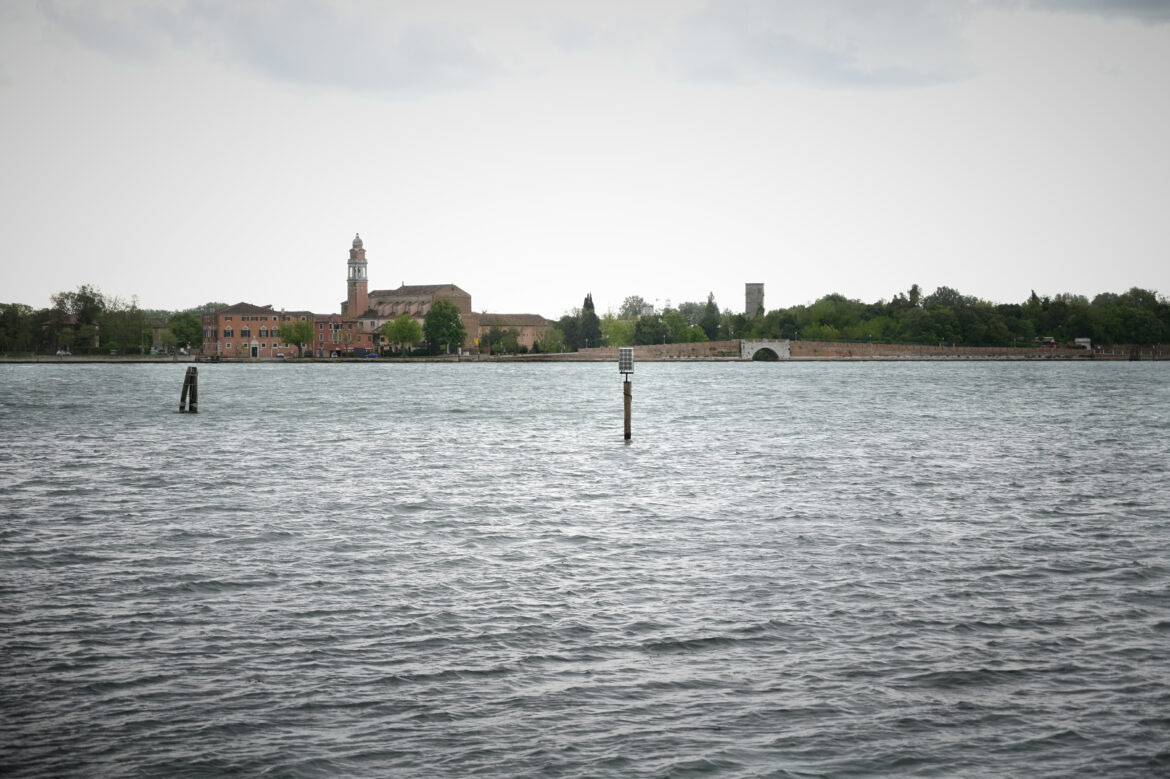
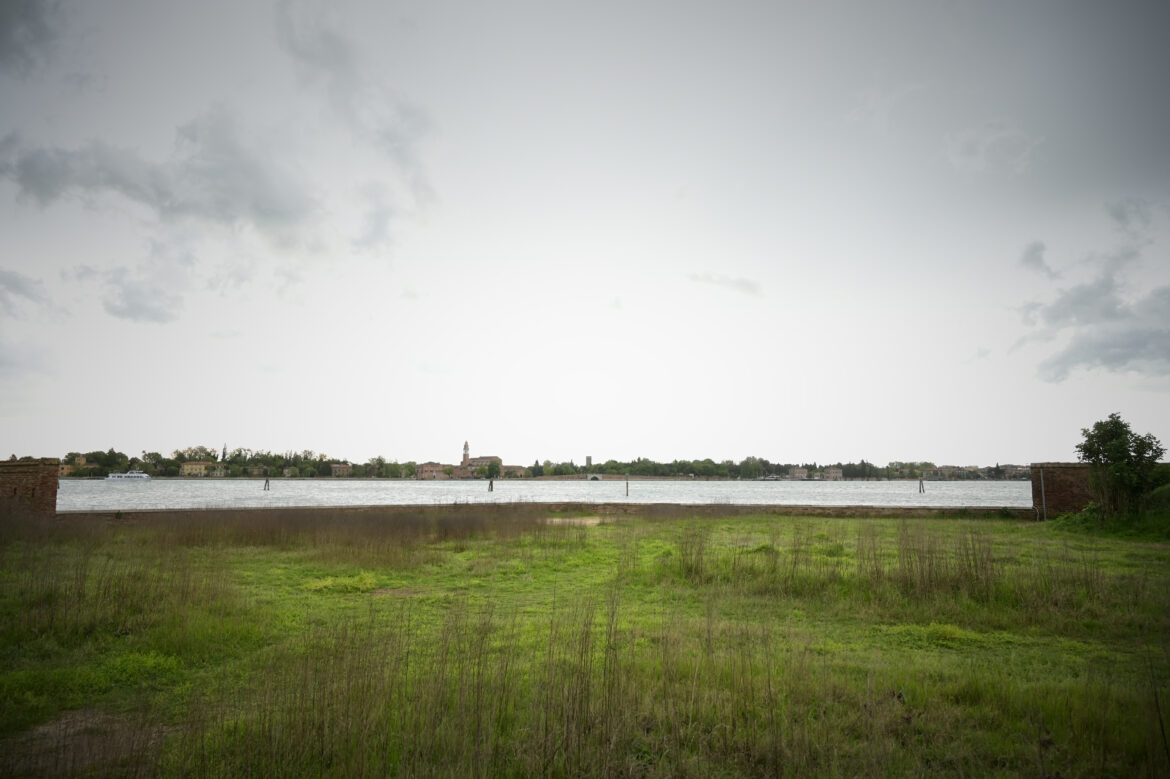
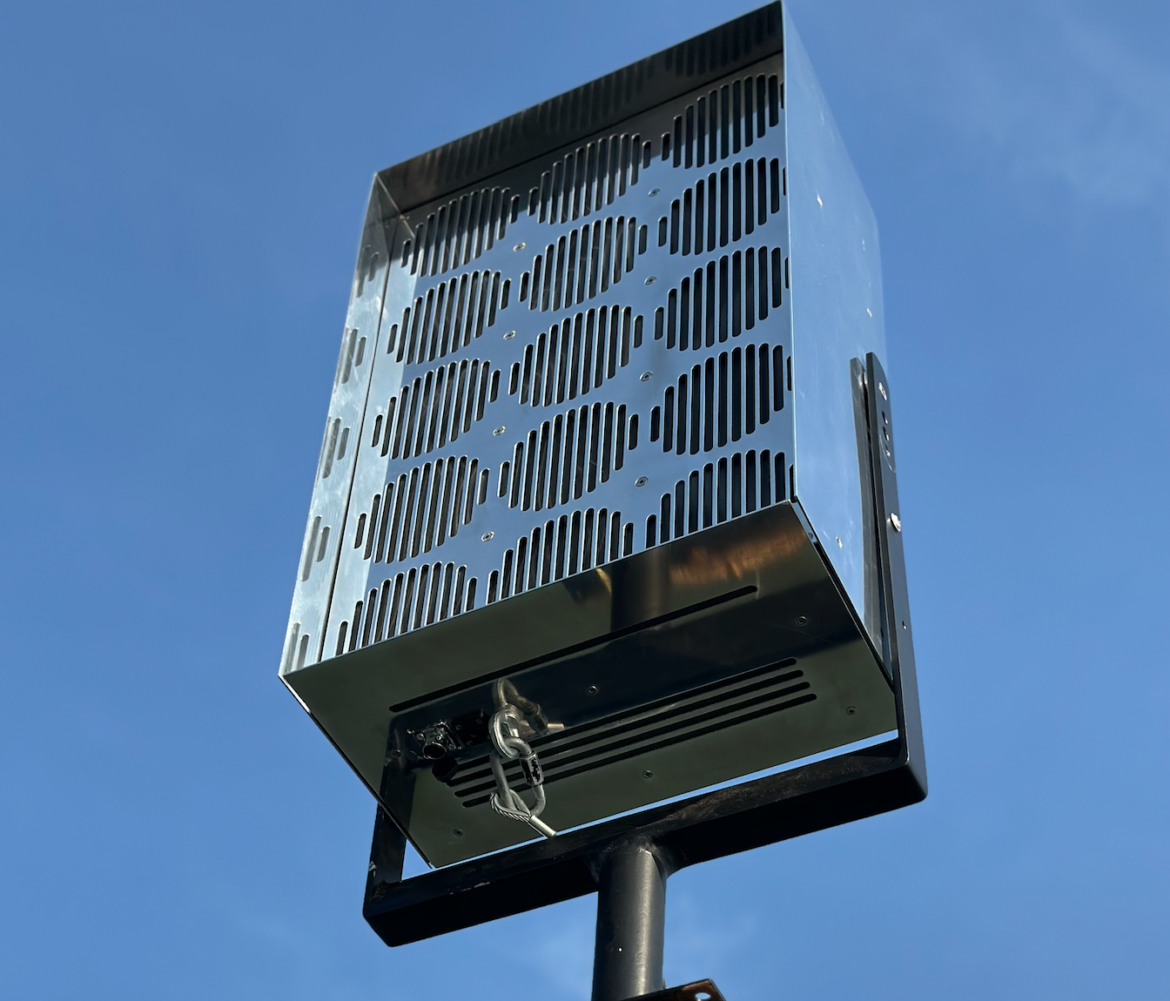
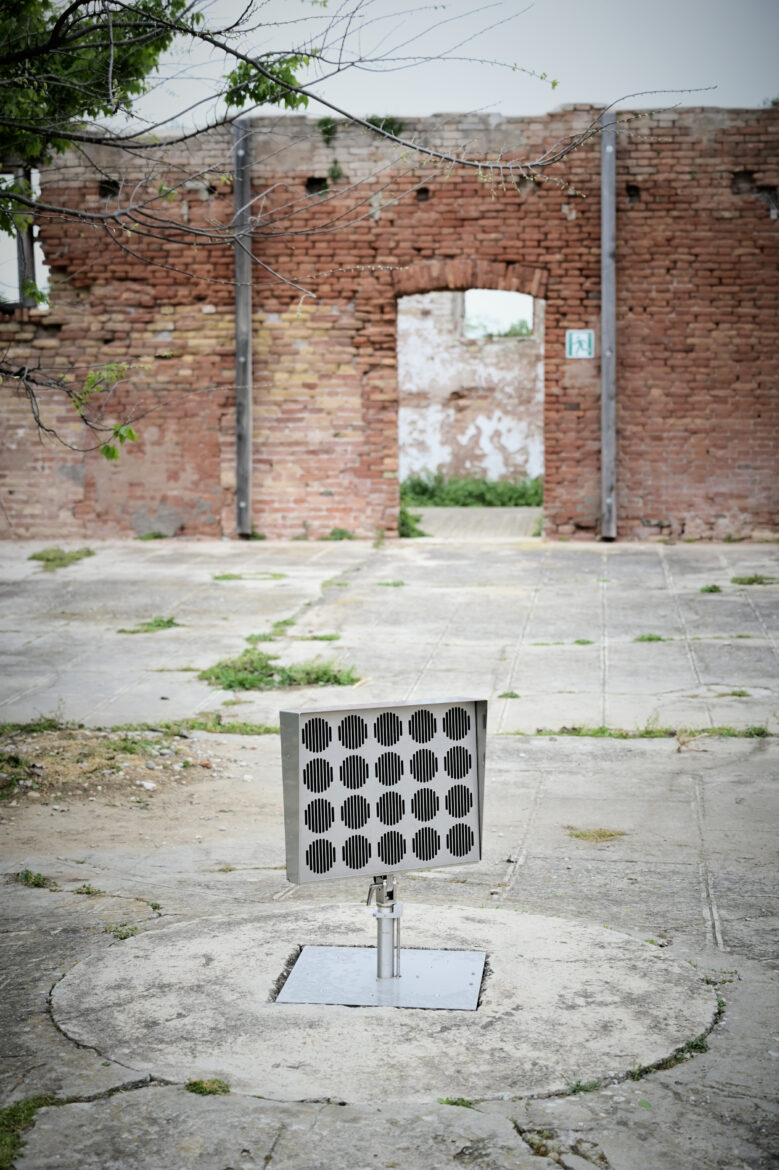
For his installation Volumes Inverted, Jan St. Werner uses two custom-made loudspeaker instruments that generate clear sound reflections of the surroundings. One of the loudspeaker instruments rotates slowly around its own axis in the center of the ruin, producing ever new sound artifacts through the mixture of direct sound and spatial reflections. The other instrument stands on a pole in the wetlands of the lagoon and emits sound beams towards the island and its buildings.

Complex reflections cause the sound particles to spread over a wide area. The result is an acoustic exchange between inside and outside, which calls into question one’s own location and requires spatial orientation to be readjusted.


In Volumes Inverted, Werner uses high-frequency acoustic spectra that are modulated in pitch and phase. This frequency range is usually occupied by birds, frogs, and crickets. If the acoustic pressure is high enough, the ear can produce acoustic emissions from the inner ear (otoacoustic emissions) as a distortion product – artifacts that manifest themselves as hallucinations in the auditory system. These phenomena are also known as ghost sounds.


The correlation between the ghost tones in the listener’s head and the movement of the partial tones in physical space can be experienced intuitively but remains unpredictable. Perception thus becomes a negotiation; we are simultaneously both inside and outside the sound.
Here Werner deals with the idea that a thing happens at one time but is experienced in different ways depending on location. In addition to perspective, he also experiments with material, architecture, distance, and scale.


The word “volume” is understood here in the sense of the three-dimensional unit of measurement for spatial fullness, which determines the size of closed buildings or vessels. Jan St. Werner’s work is an extension of this concept, an attempt to relativize the conventional concept of space and to understand it in terms of a cybernetic understanding as a dynamic control loop.


The 60th International Art Exhibition – La Biennale di Venezia took place in Venice from April 20 to November 24, 2024. The commissioner was the ifa – Institut für Auslandsbeziehungen. The GErman Pavillon was curated by Çağla Ilk.

https://2024.deutscher-pavillon.org/en/artists

Fotos Thomas Aurin, Video Joseph Kadow
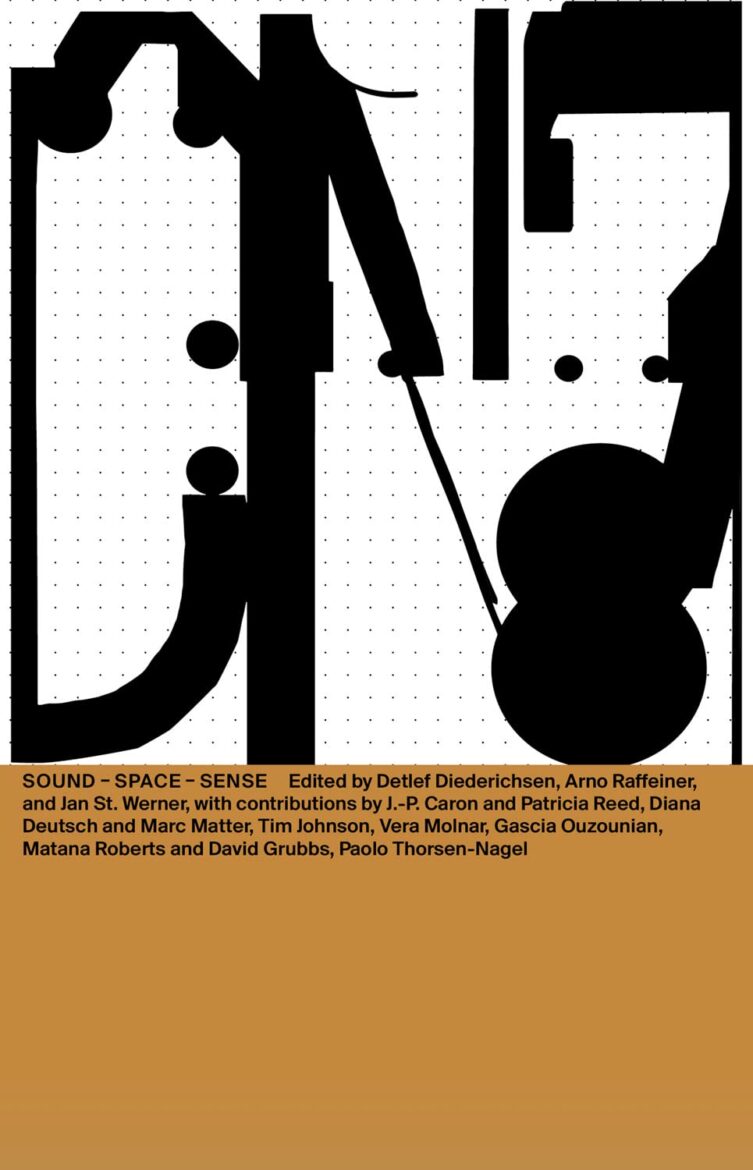
Sound Space Sense – DNA21

The New Alphabet, Volume 21 

A publication series by HKW Berlin

Editors: Detlef Diederichsen, Arno Raffeiner, Jan St. Werner

Publisher: Spector Books

90 pages, German and English edition

Color illustrations, paperback with folded dust cover

ISBN DE: 978-3-95905-657-1

ISBN EN: 978-3-95905-658-8

Price: 10 €

People perceive audio events in very different ways. There is still a great deal of uncertainty about the physics, biology, signifiers and unconscious processes on the basis of which auditory experiences are constructed. The book applies the methods of artistic research to convey a sense of how mental space, social practice and the direct experience of sound relate to each other and how connections are generated between these levels – a topology of resonances, reflections and vibrations in perpetual motion.

With contributions by J.-P. Caron and Patricia Reed, Diana Deutsch and Marc Matter, Tim Johnson, Vera Molnar, Gascia Ouzounian, Matana Roberts and David Grubbs as well as Paolo Thorsen-Nagel

Table of contents:

Introduction – Detlef Diederichsen, Arno Raffeiner, Jan St. Werner

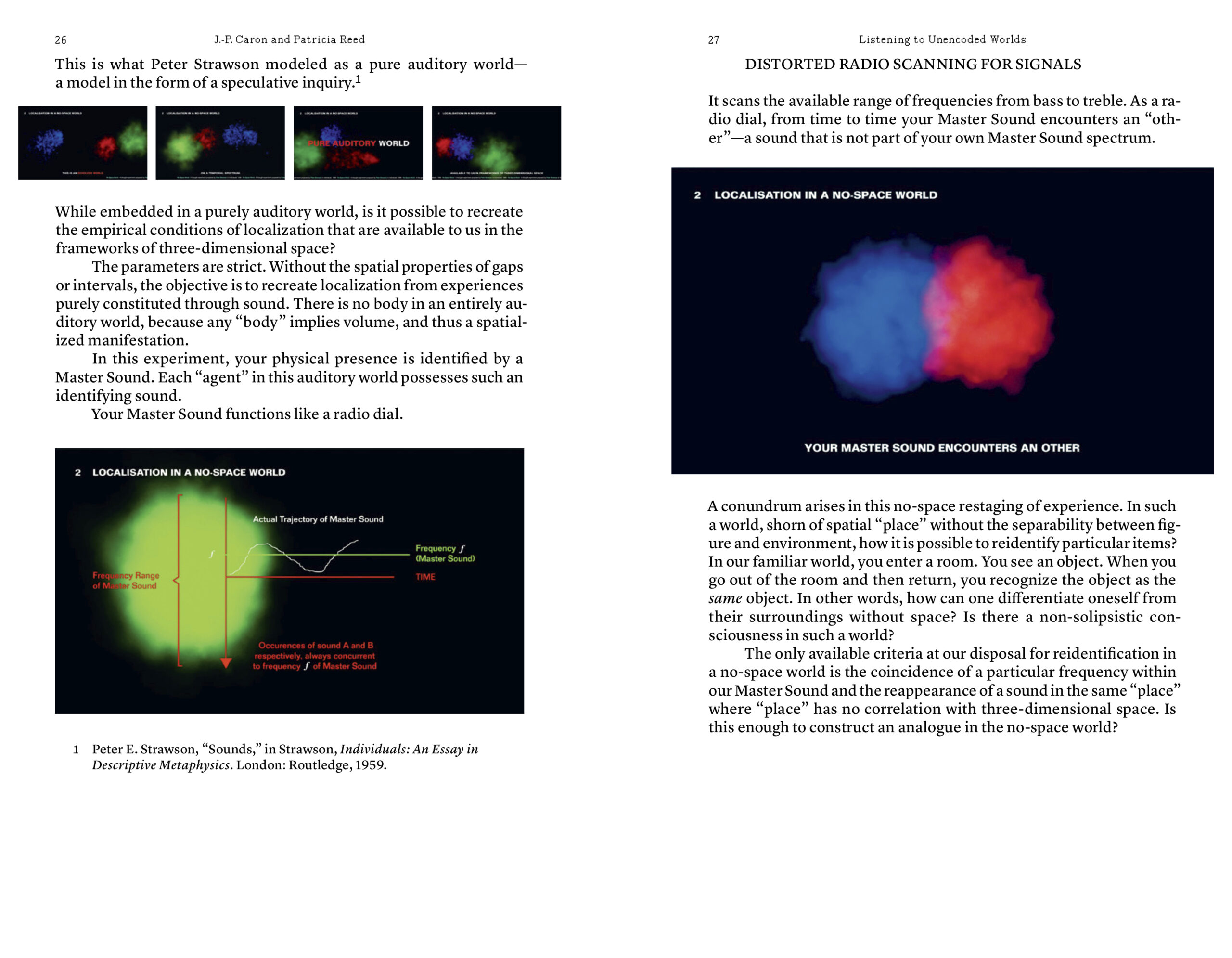
Listening to Unencoded Worlds – J.-P. Caron and Patricia Reed

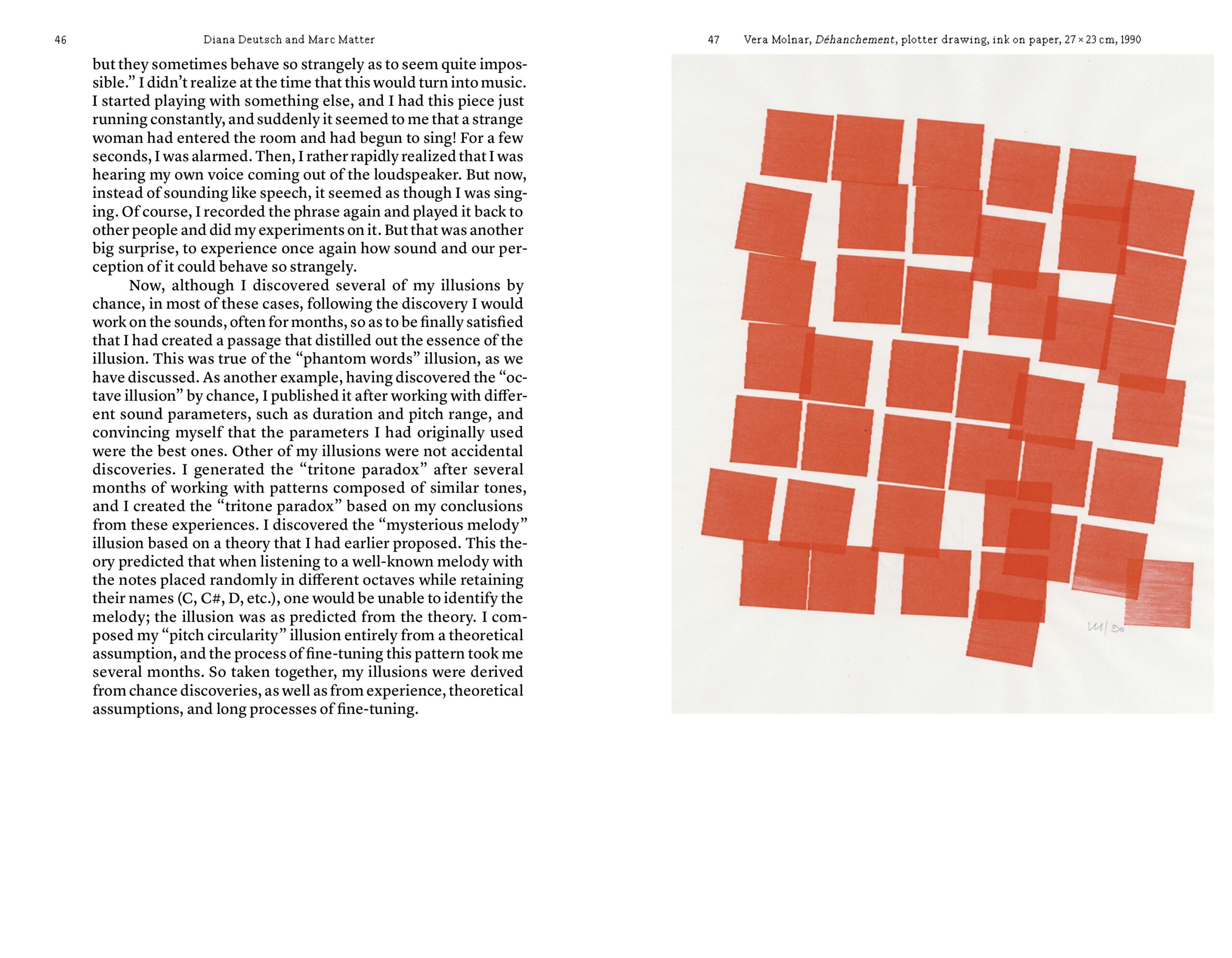
“A strange woman had entered the room and begun to sing” – Diana Deutsch and Marc Matter in Conversation

This somewhere that is still moving – Tim Johnson

View from the Balcony – Matana Roberts and David Grubbs in Conversation

Becoming Air: On Sonic Spatial Metaphysics – Gascia Ouzounian

The Body as Sound, the Sound as Body – Paolo Thorsen-Nagel

With graphic works by Vera Molnar courtesy DAM Projects

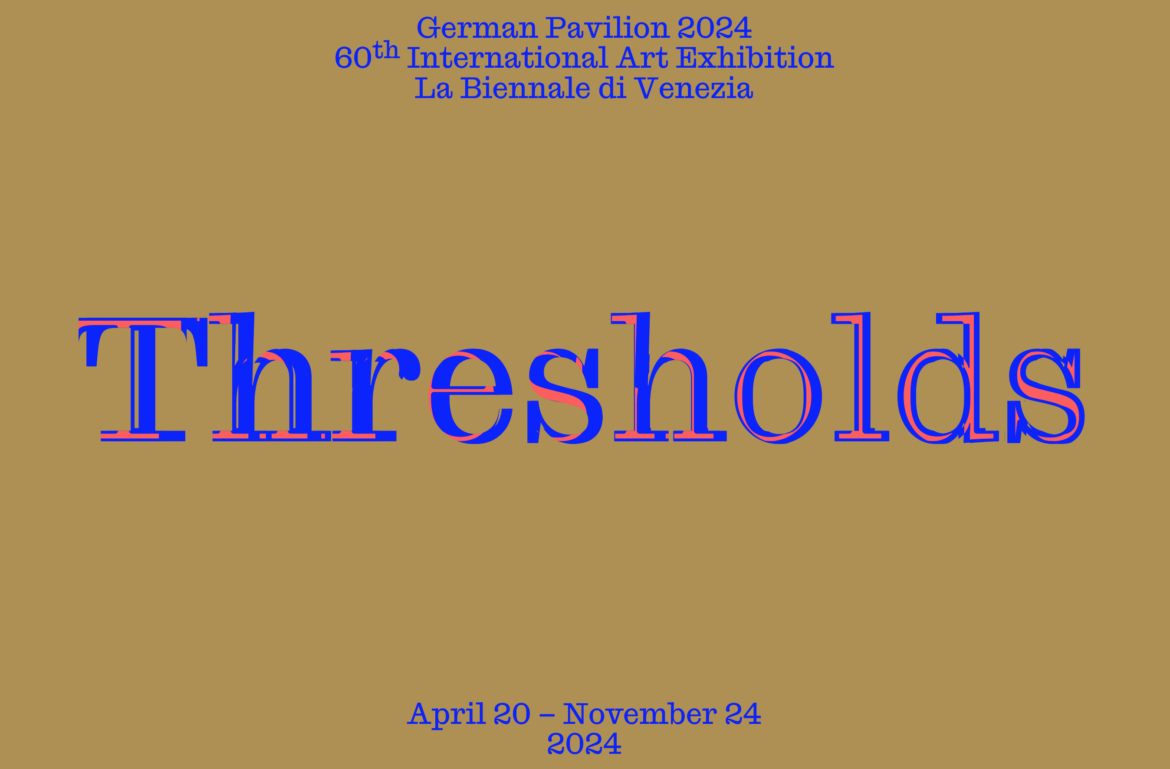
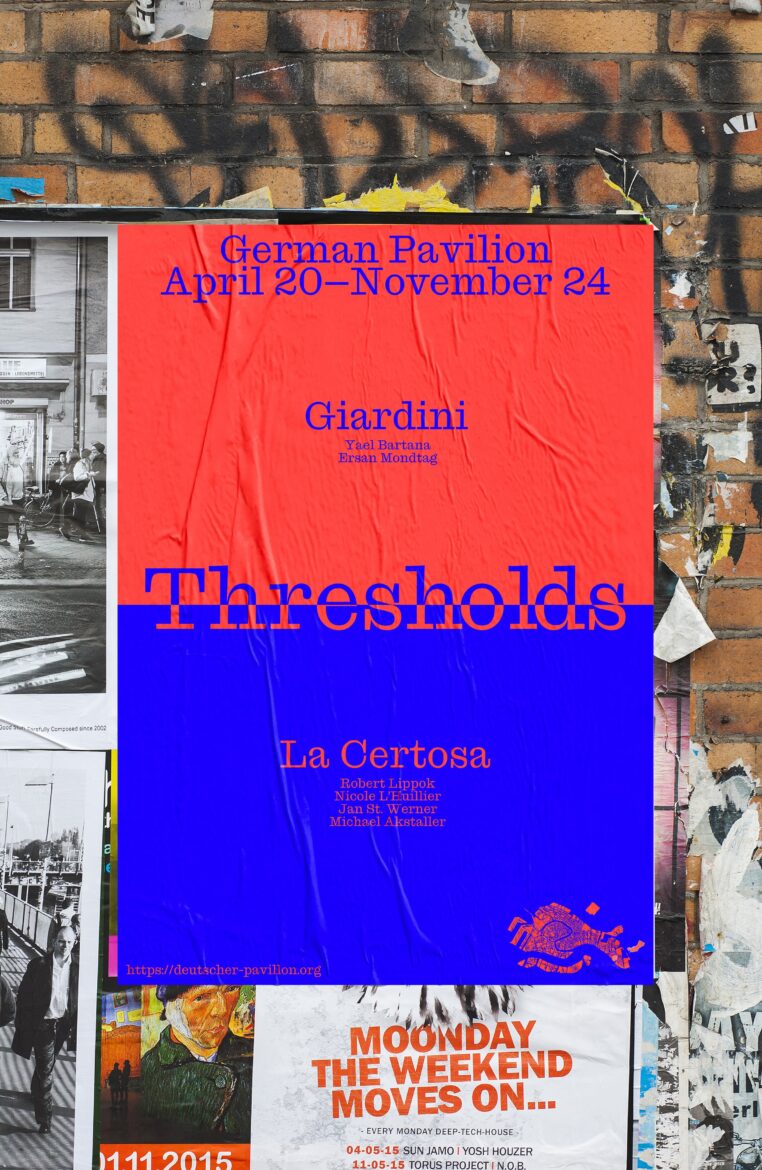
Thresholds – German Pavilion, Venice Biennale 2024

Under the title Thresholds, the German Pavilion at the 60th Venice Biennale 2024 narrates history and the future from various artistic positions. Thresholds stands for the present as a place where no one can stay and that only exists because one thing has occurred and another still awaits. For people with biographies characterized by migration, the temporal perception of the present as a threshold between the retrospective and the prospective is paired with a fundamental spatial and physical experience of living at the intersection of different belongings.

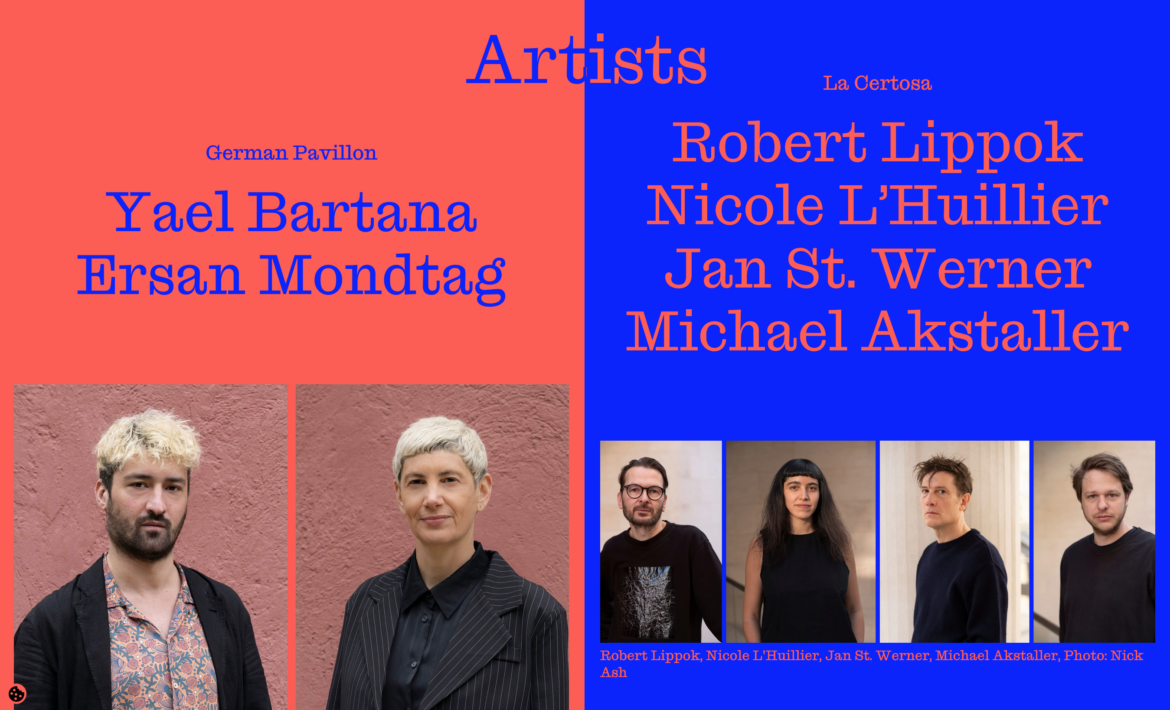
Artists of the German Pavillon and Island of Certosa: Yael Bartana, Ersan Mondtag, Michael Akstaller, Nicole L’Huillier, Robert Lippok, Jan St. Werner

Curated by Çağla Ilk

https://www.ifa.de/pressemitteilung/thresholds-der-deutsche-pavillon-auf-der-60-internationalen-kunstausstellung-la-biennale-di-venezia